What the C-7 License Actually Covers
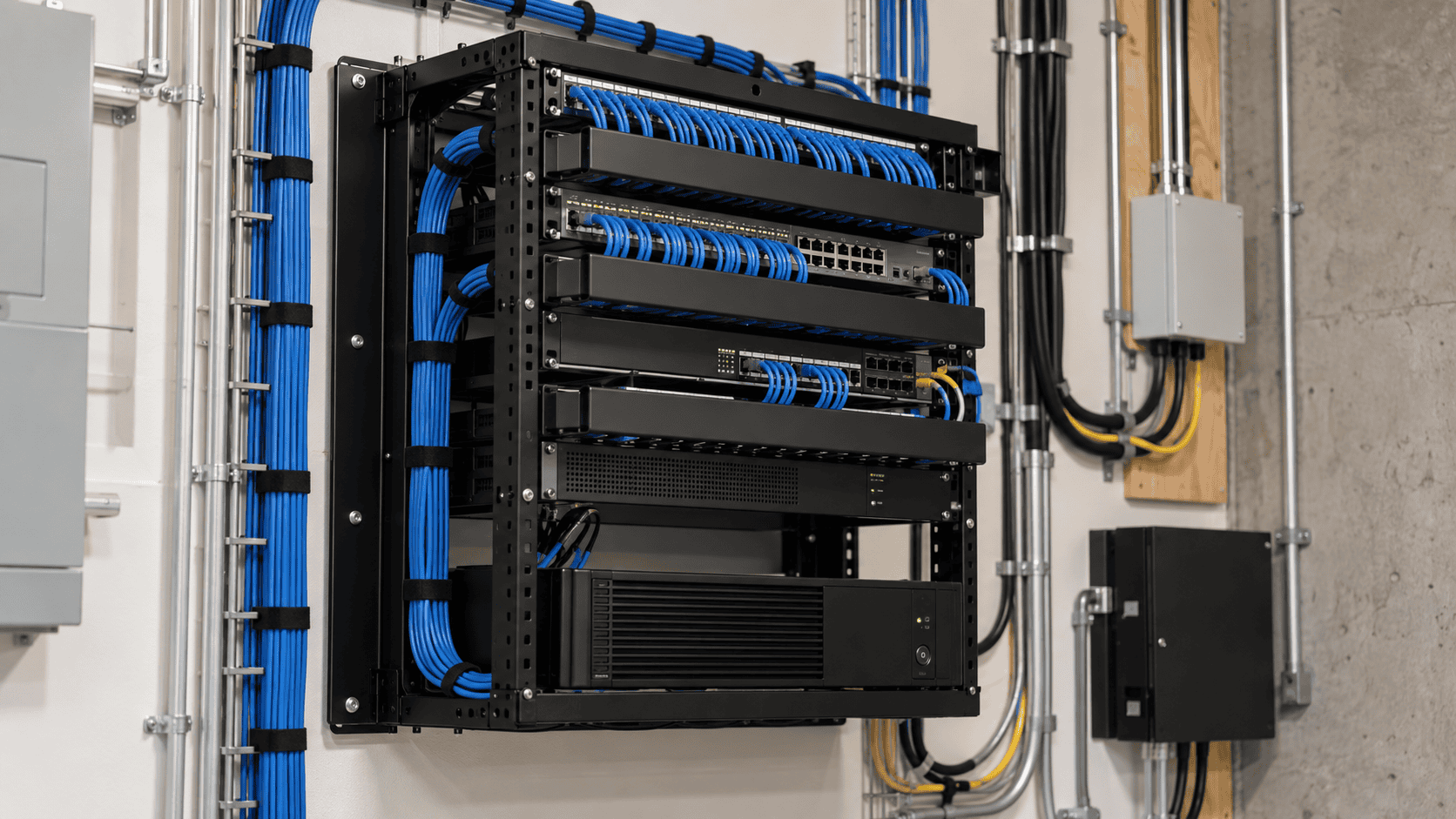
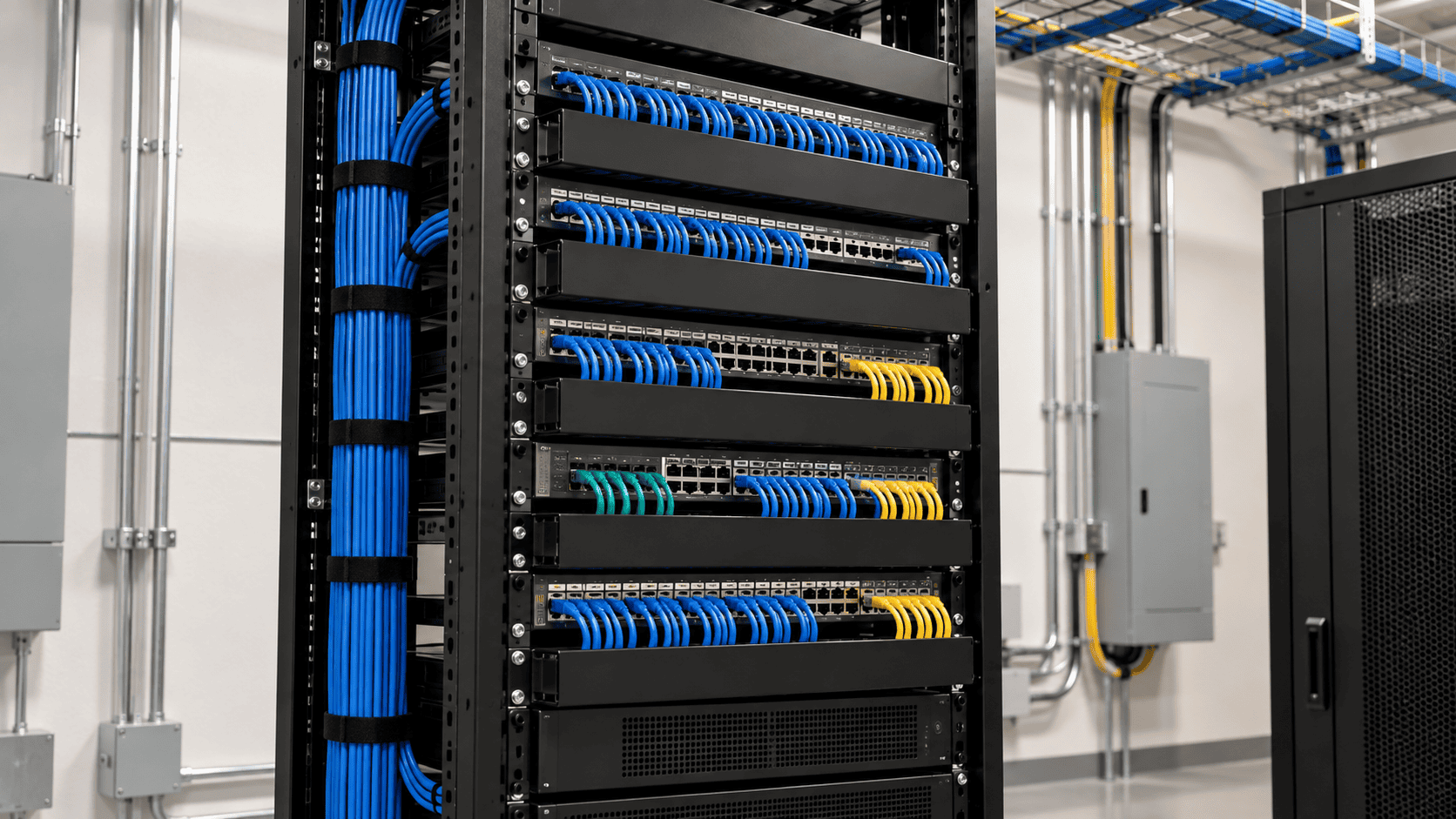
A licensed low-voltage contractor in California holds a C-7 classification issued by the Contractors State License Board. That license authorizes installation, maintenance, and alteration of low-voltage systems including structured cabling, fire alarm wiring, CCTV and surveillance systems, access control, sound and communications systems, and data network infrastructure.
The work is defined by voltage and system type, not by complexity. If a project involves cable runs for network equipment, camera systems, card readers, or fire alarm devices, it falls under C-7 scope. If it involves line-voltage electrical work—circuit breakers, outlets, 120V or 240V wiring—it requires a C-10 electrical license.
Black Owls Network Communications holds C-7 license #1141654. That credential means we can legally contract for low-voltage projects over $500 in combined labor and materials, pull permits where required, and carry the insurance and bonding that protect property owners when something goes wrong.
A handyman in California can perform tasks under $500 total per project without a license. Any work beyond that threshold requires a contractor’s license in the appropriate classification. That is not a guideline. It is a legal boundary.
Why the Dollar Threshold Matters
The $500 handyman limit is not per visit or per invoice. It is per project, defined as all labor and materials related to a single job or improvement. A property owner who hires an unlicensed person for repeated small invoices that together exceed $500 is hiring unlicensed contracting, not handyman work.
Most structured cabling projects in the Bay Area exceed $500 quickly. Running four Cat6A lines to a new office space, mounting and configuring a PoE switch, installing two access points, and terminating a patch panel can easily reach $1,200 to $2,000 depending on cable distance and wall penetrations. That is C-7 work. A handyman performing that work is operating outside legal authority.
The distinction is not academic. When unlicensed work causes property damage, insurance claims can be denied. When code violations are discovered during a building inspection or sale, the property owner is responsible for correcting them, often at full replacement cost. Unlicensed contractors do not carry the bond or liability insurance required of licensed contractors, so there is no mechanism to recover those costs.
What a Licensed Low-Voltage Contractor Bay Area Can Do That Others Cannot
Pull Permits
Many jurisdictions in the Bay Area require permits for low-voltage installations that involve fire alarm systems, access control tied to life-safety systems, or structured cabling in commercial buildings. Only a licensed contractor can pull those permits.
A handyman cannot. An IT consultant cannot. A facilities manager cannot.
When unpermitted work is discovered during a sale, refinance inspection, or tenant improvement, the property owner must bring it into compliance or disclose it. That often means hiring a licensed contractor to assess the installation, remove non-compliant sections, and reinstall to code. We have seen homeowners pay twice: once for the original unpermitted work and once to fix it.
Carry Mandatory Insurance and Bonding
California requires licensed contractors to carry workers’ compensation insurance if they have employees and to post a contractor’s bond with the CSLB. The bond exists to compensate property owners if a contractor abandons a project, performs defective work, or fails to pay suppliers or subcontractors.
Handymen and unlicensed installers are not required to carry either. If an unlicensed installer is injured on a property, the property owner’s homeowners or commercial liability policy may not cover it. If the installer damages a water line while drilling through a wall or shorts out network equipment during a termination error, there is no bonding mechanism to recover the cost.
Licensed contractors also carry general liability insurance that covers property damage and errors during installation. That coverage protects the property owner, not just the contractor.
Provide a Legal Contract and Lien Rights
California law provides specific consumer protections for work performed under a contractor’s license. A licensed contractor must provide a written contract for jobs over $500 that includes the license number, business address, and scope of work. The contract gives the property owner statutory rights, including the ability to file a complaint with the CSLB if the work is defective or incomplete.
An unlicensed person cannot provide that contract. They also cannot file a mechanic’s lien if payment is disputed, which ironically benefits property owners in disputes but also signals that the arrangement exists outside the legal framework designed to protect both parties.
Perform Work to Code Without Supervision
A C-7 license requires passing a trade exam and a business law exam, demonstrating four years of journey-level experience in low-voltage work, and maintaining continuing education. The license holder is presumed competent to interpret Title 24 building codes, NEC Article 800 (communications circuits), and local amendments that govern cable support, fire stopping, and plenum ratings.
Unlicensed installers, even those with significant IT experience, often lack familiarity with these codes. We routinely see non-plenum-rated cable in air-handling spaces, unsupported cable runs exceeding code maximums, and inadequate fire stopping at suite demarcations. Those violations create liability and can require expensive remediation if discovered during an inspection.
The IT Consultant Problem
Many IT consultants and managed service providers in the Bay Area install cabling as part of their service offerings. Some hold C-7 licenses. Most do not.
An IT consultant without a C-7 license can legally design a network, specify equipment, and configure switches and access points. They cannot legally run cable, mount equipment, or perform physical installation work on projects over $500 unless they subcontract to a licensed C-7 contractor.
In practice, many do it anyway. Property owners assume that technical expertise in networking translates to legal authority for installation. It does not. The work may be competent, but it is unlicensed, which creates the same permit, insurance, and liability gaps that apply to handyman work.
When we are called to troubleshoot or expand a network installed by an unlicensed IT consultant, we often find workmanlike cable terminations and functional network configurations alongside code violations and documentation gaps. The technical work was adequate. The installation work was not compliant.
Low-Voltage Contractor vs Electrician
Property owners sometimes assume that a C-10 electrician can perform any wiring work, including low-voltage. That is not correct.
A C-10 electrical contractor is licensed for high-voltage systems: branch circuits, panels, service upgrades, and anything operating at line voltage. A C-7 low-voltage contractor is licensed for communications and signaling systems operating below 91 volts.
The trades overlap at the edges—both may install conduit, both understand grounding and bonding, both work with building inspectors—but the skill sets and code requirements differ. An electrician trained primarily in residential or commercial power distribution may not be current on structured cabling standards, PoE power budgets, or fiber termination techniques. A low-voltage contractor may not be qualified to install a dedicated circuit for a network rack.
Some contractors hold both licenses. Most specialize. When a project includes both high-voltage electrical work and structured cabling, the property owner should expect coordination between a C-10 and a C-7, not assumption that one license covers both.
Black Owls holds a C-7 license, not a C-10. When a project requires new electrical circuits, we coordinate with a licensed electrician. We do not perform work outside our classification.
What This Means for Property Owners and Managers
Hiring a licensed C-7 low-voltage contractor costs more than hiring a handyman or an unlicensed installer. The difference is not margin. It is the cost of insurance, bonding, permitting, continuing education, and business overhead required to operate legally.
That cost buys several things a property owner cannot get otherwise:
- Legal authority to perform the work and pull permits where required
- Insurance coverage that protects the property if something goes wrong
- A bond that provides recourse if the contractor fails to complete the work or pay subcontractors
- A written contract with statutory consumer protections
- Work performed to current code, reducing liability during inspections or sale
Property managers and commercial landlords also face tenant improvement requirements that often mandate licensed contractors for insurance and lease compliance. A tenant who hires an unlicensed installer may void lease provisions or create liability for the property owner if the work causes damage or fails inspection.
For residential homeowners, the risk is less acute but not absent. A home sale can be delayed or a price reduced if an inspector flags unpermitted low-voltage work in a fire alarm system or structured wiring enclosure. Homeowners insurance may not cover damage caused by unlicensed work, particularly if the installation involved modifications to building structure.
What We Actually Do
Black Owls installs structured cabling systems, wireless networks, surveillance and access control systems, and related low-voltage infrastructure in the Bay Area. We pull permits when required. We carry liability insurance and maintain our bond with the CSLB. We provide written contracts and warranties. We document our installations with as-built diagrams and labeling.
We do not troubleshoot your laptop, configure your office printer, or recover your email password. Those are IT support tasks, not low-voltage contracting. We also do not install high-voltage electrical circuits, repair HVAC systems, or perform general construction. We stay within our C-7 classification.
The distinction matters because property owners often receive proposals from handymen, IT consultants, and licensed contractors for the same project. The scope of work may look identical. The price will differ, sometimes significantly. The legal and insurance framework differs entirely.
A licensed contractor is not necessarily better at the technical work. Some unlicensed installers are highly skilled. But only a licensed contractor can provide the legal compliance, insurance protection, and accountability structure that the state of California requires for projects over $500.
How to Verify a C-7 License
The CSLB maintains a public license lookup at cslb.ca.gov. Enter the license number or business name to verify active status, check for disciplinary actions, and confirm the classification.
Black Owls Network Communications is listed as C-7 license #1141654. The license is active, current, and unburdened by complaints or disciplinary findings.
Any contractor who hesitates to provide a license number or discourages verification is sending a signal. Listen to it.
When to Call a Licensed Low-Voltage Contractor Bay Area
If a project involves running cable, installing network equipment, mounting cameras or access points, or connecting structured wiring systems, and the combined cost of labor and materials will exceed $500, California law requires a licensed contractor.
If the project involves a fire alarm system, access control, or structured cabling in a commercial building, many jurisdictions require permits, which means a licensed contractor is mandatory.
If the project involves modifying a building—drilling through fire-rated walls, penetrating a roof for an antenna mast, or installing in-wall cabling—a licensed contractor provides the insurance and bonding that protects the property owner if the work causes damage.
If those conditions apply, hiring a handyman or unlicensed IT consultant exposes the property owner to risk that a few hundred dollars in savings does not justify.
We offer a paid site survey for projects where scope and code requirements are unclear. That survey includes a written proposal, a breakdown of permit requirements, and a timeline. If the project does not require a C-7 contractor, we will tell you. If it does, we will explain why and what compliance entails.
Call Black Owls at the number on this site or email through blackowls-nc.com. We will schedule a walkthrough and provide a written estimate within a week.