
Commercial CCTV Installation in the East Bay
Black Owls Network Communications designs and installs commercial CCTV and security camera systems for businesses across the East Bay — warehouses, offices, retail, and multi-site facilities. As a technology company, we handle the entire stack behind your cameras, not just the cameras themselves: the structured cabling, the network, the power, and the access control they all depend on.
What It Takes
A commercial CCTV system is four parts, not one.
A business closed circuit television system is not a consumer camera scaled up. It’s an integrated low-voltage system where four layers have to work together — and most installers only do one of them.
Cameras & Coverage
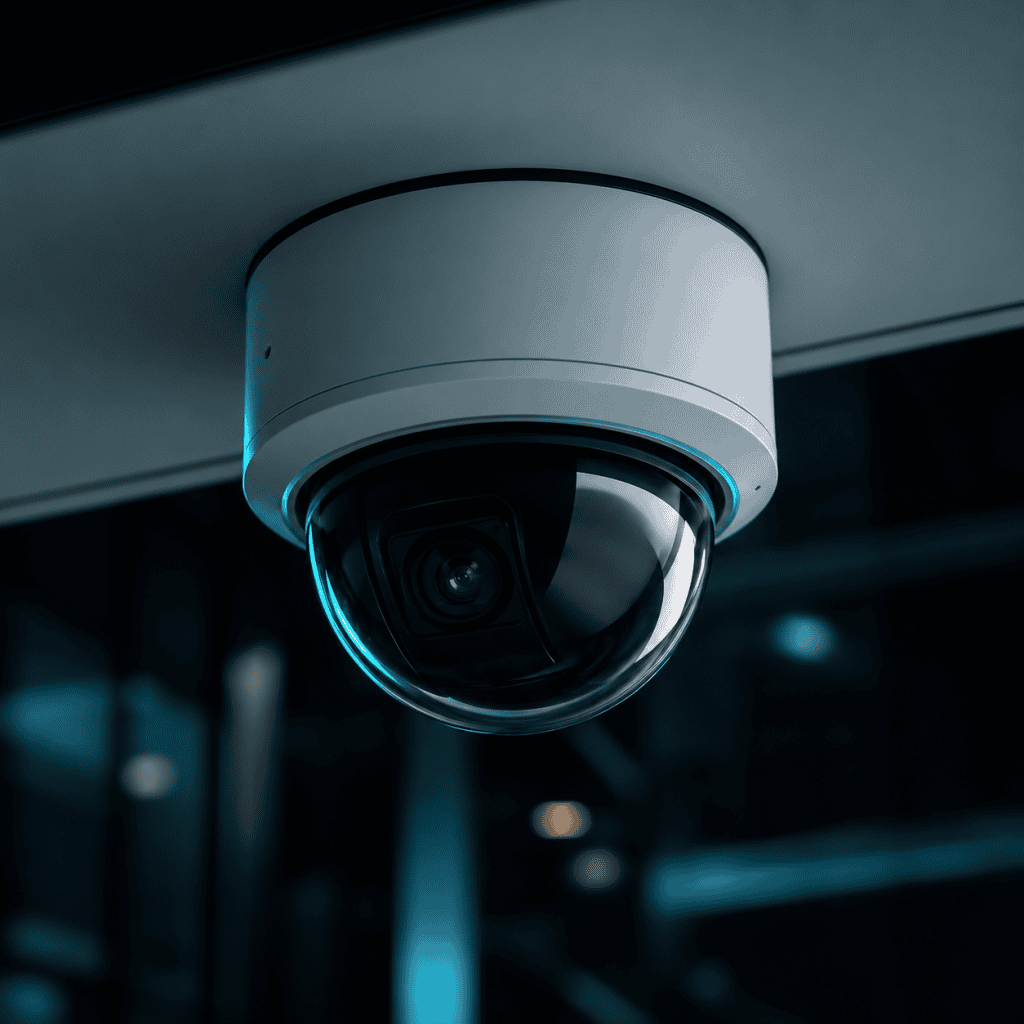
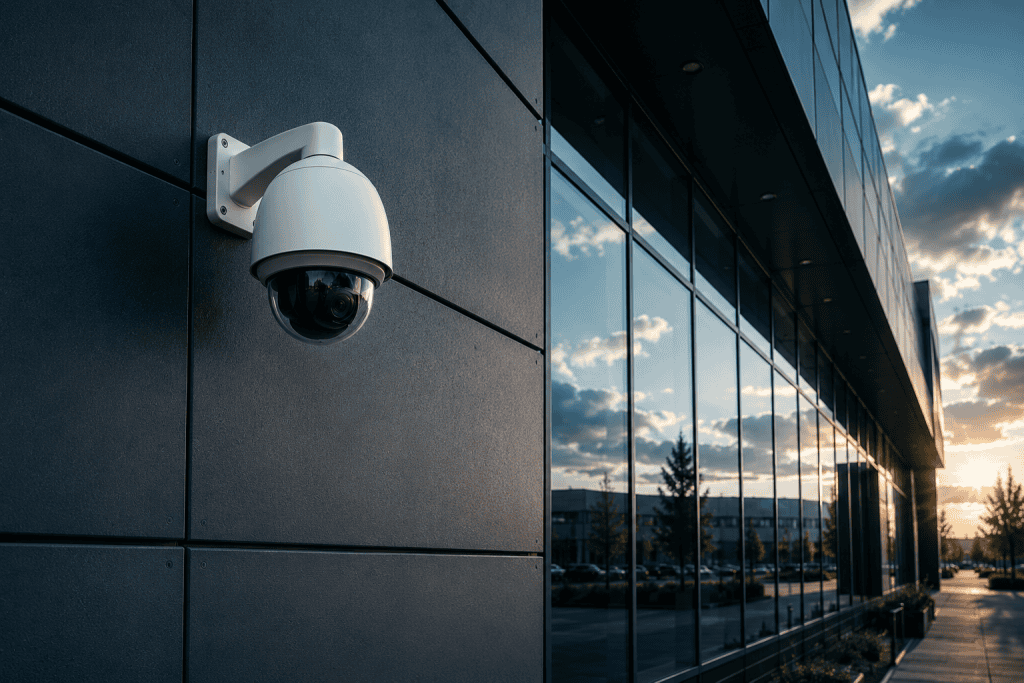
The right camera for the environment — interior, exterior, low-light, license-plate, or high-resolution detail — placed to eliminate blind spots across entrances, floors, yards, and perimeters.
Structured Cabling
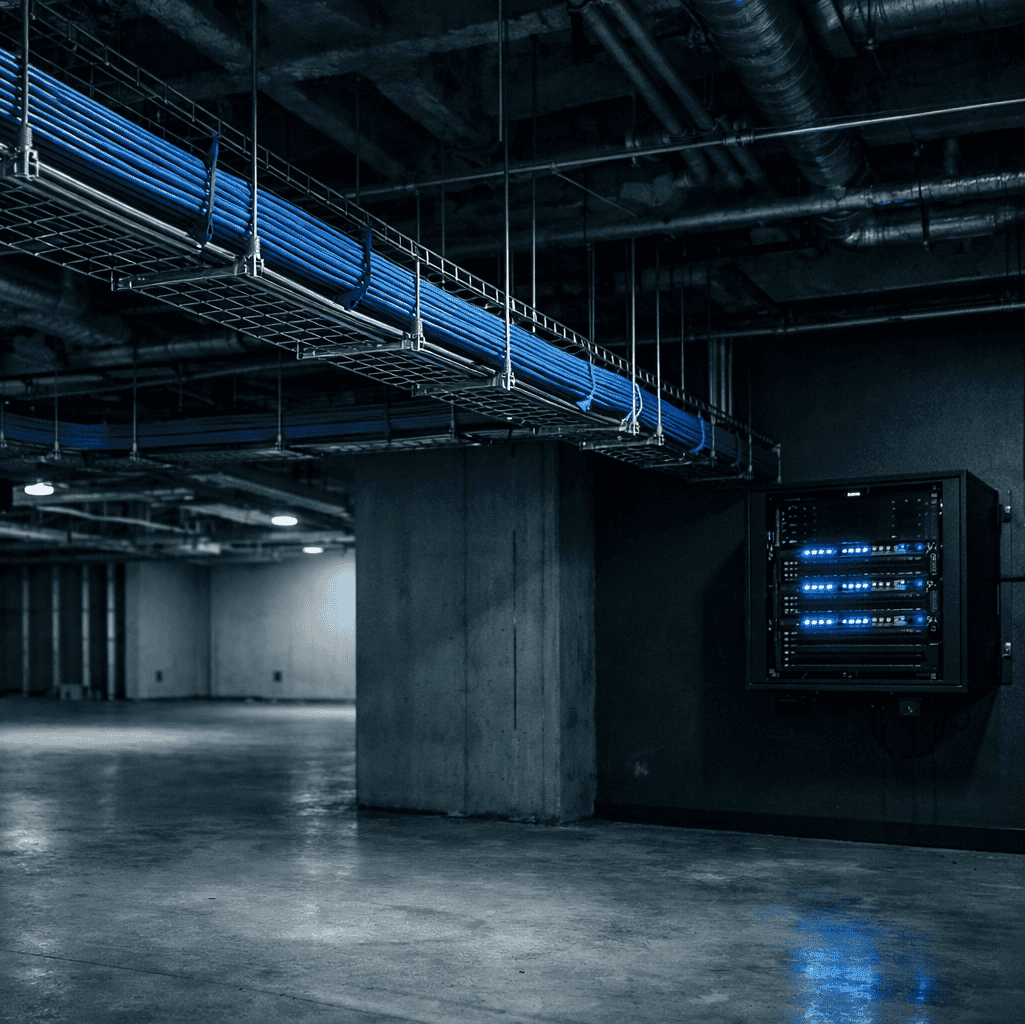
Every camera runs on cable that has to be pulled, terminated, labeled, and tested to standard. Poor cabling is the #1 reason commercial camera systems fail months after install. We cable to TIA standards and document every drop.
Network & Power

Cameras are network devices. They need correctly configured switches, sufficient PoE budget, VLAN segmentation, and a recorder (NVR) sized to your retention needs. We build the network the cameras live on — not hand you cameras and hope IT can host them.
Access Control
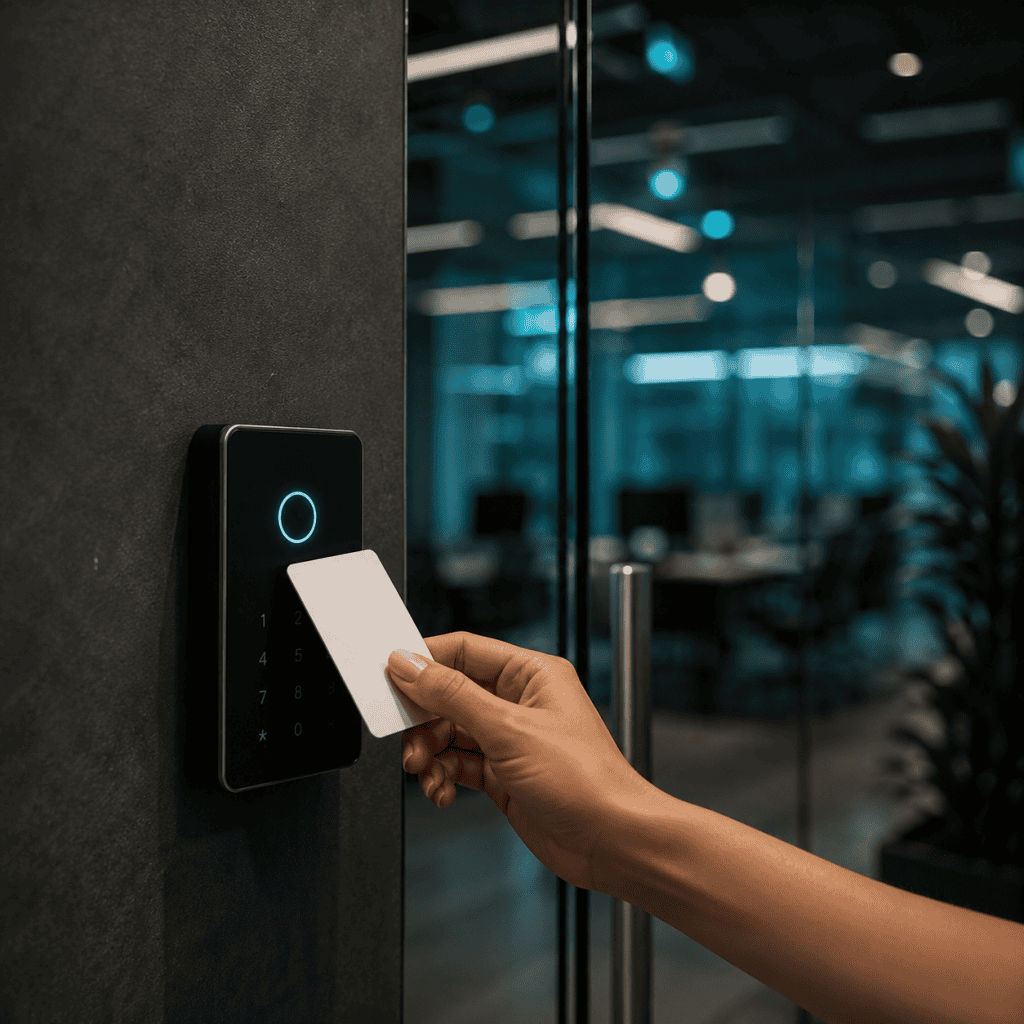
Optional, same infrastructure. Door readers, key-card and mobile credentials, and entry logs run on the same low-voltage backbone as your cameras — installed on the same visit, same cabling plan. No second contractor, no second mobilization.
Why One Point of Contact
One point of contact for the whole technology stack.
Here’s what usually happens on a commercial security surveillance camera project: a security company quotes the cameras, a separate crew runs the wire, and your IT vendor configures the network. Three vendors, three schedules, three points of finger-pointing when something doesn’t work. Black Owls collapses that into one — designed together, installed together, documented together.
Single point of accountability
One point of contact owns the entire system — from camera placement to the cable in the wall to the switch in the rack. When you have a question or a problem, there’s one number to call, not three vendors blaming each other.
Local, direct, no enterprise overhead
The large national integrators carry overhead that forces a high project minimum. For an East Bay business that needs a properly engineered camera system without enterprise pricing or a four-vendor circus, working direct with a local licensed contractor is the difference.
Where We Install
Commercial CCTV for your environment.
Warehouses & Distribution
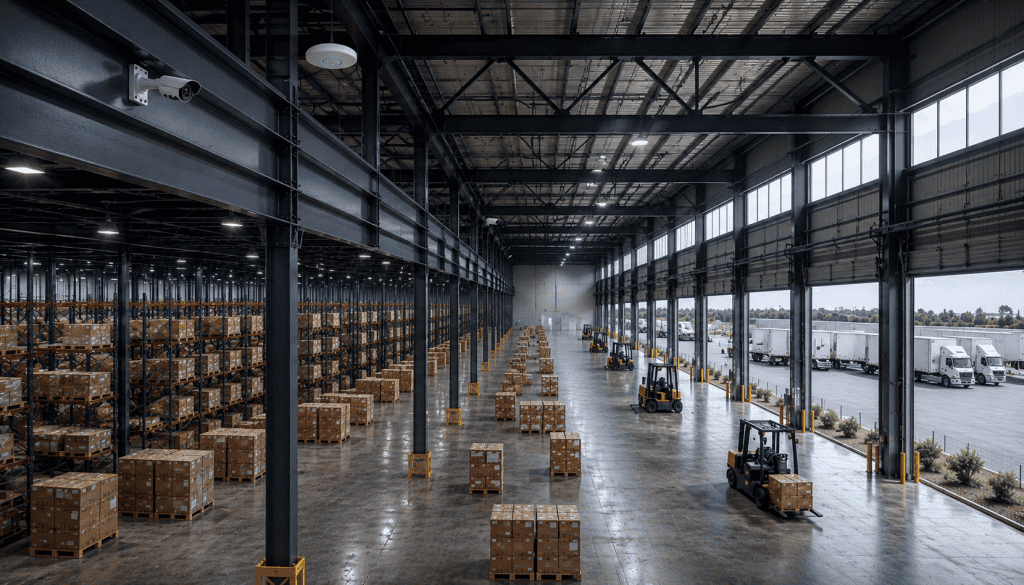
Perimeter and yard coverage, high-mount interior cameras, license-plate capture at gates, and retention sized for incident review.
Offices & Tech Spaces
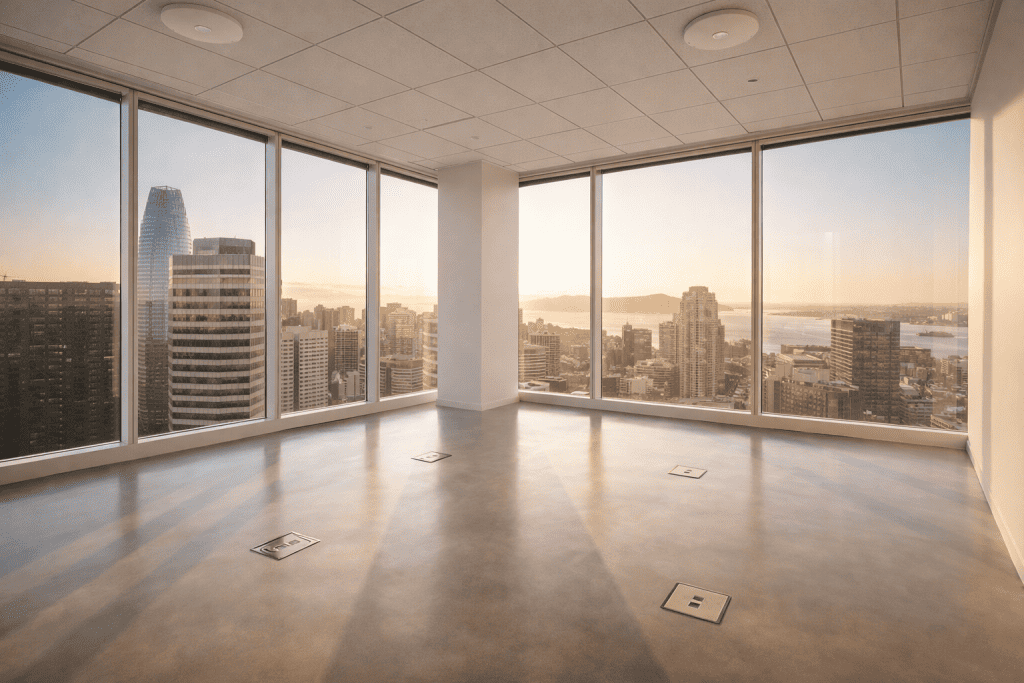
Discreet interior coverage, entry monitoring, and integration with access control and the existing network.
Retail
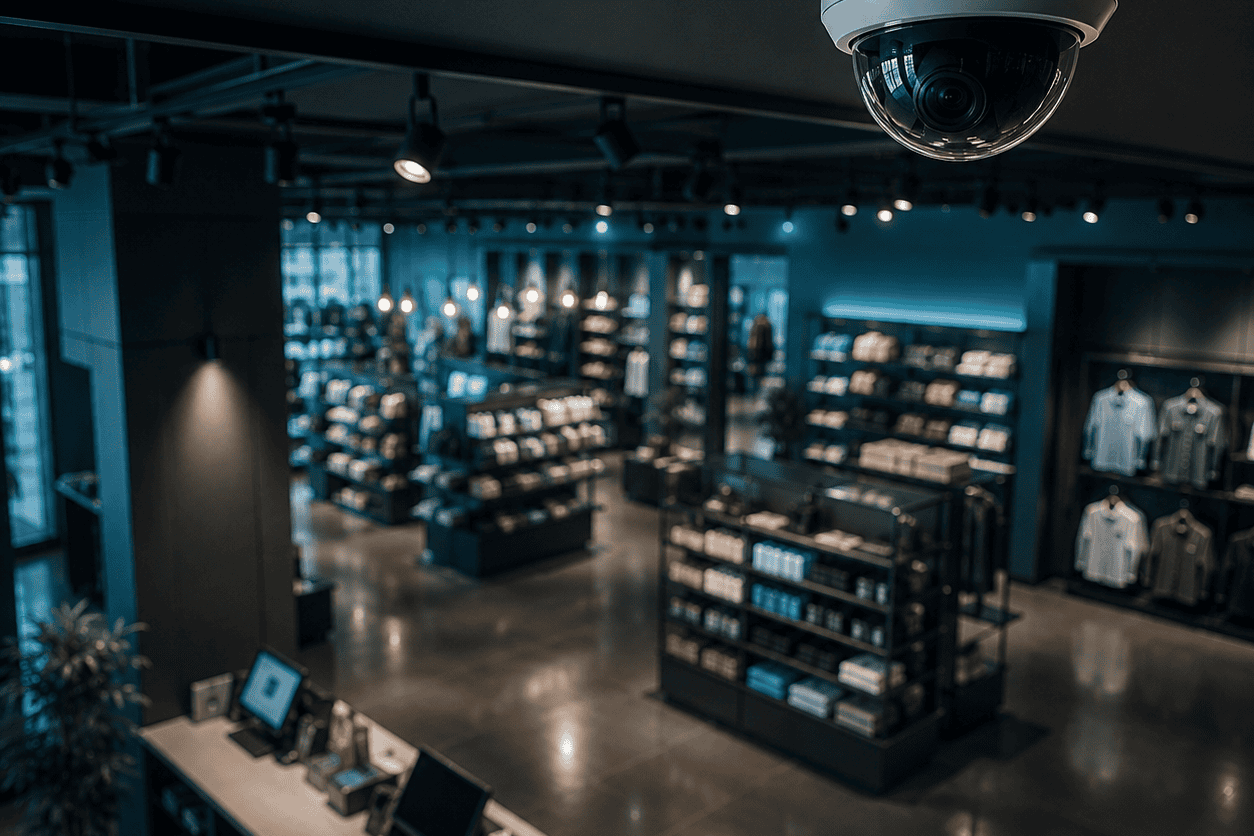
Point-of-sale and floor coverage, loss-prevention placement, and multi-location viewing from one platform.
Multi-Site Operations
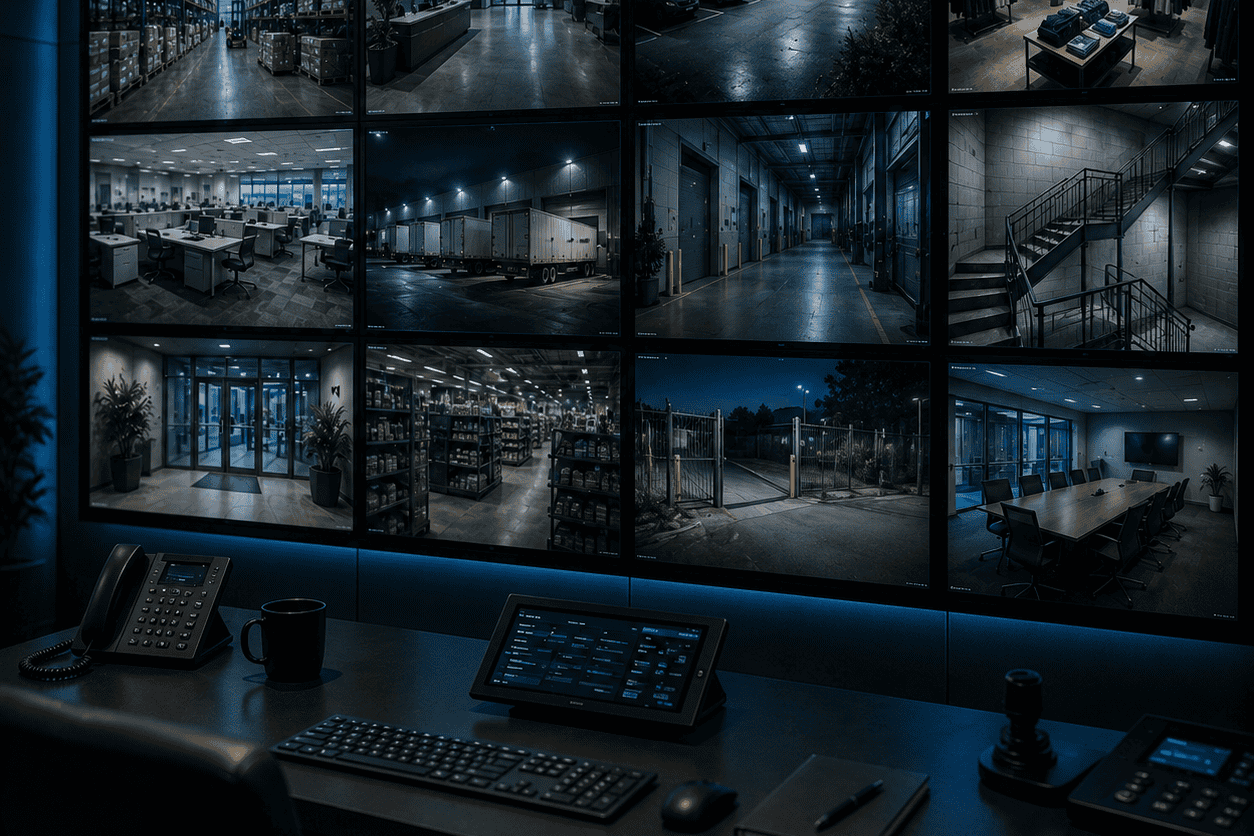
Consistent system design across locations, centralized remote viewing, and one contractor who knows every site.
What You Get
Engineered, documented, and backed by a license.
Engineered for your site
A camera system designed for your specific building and risk — not a one-size template. Cabling pulled, terminated, labeled, and tested to standard. A network and recorder sized to your actual retention needs.
Documented and accountable
Complete as-built documentation, labeling, and test results — for your records, your insurer, or a future contractor. Optional access control on the same infrastructure.
Frequently Asked Questions
Commercial CCTV cost comes down to four things: how many cameras you need, the type and resolution, how much cabling has to be run, and whether you’re adding video storage or access control. Most of the total is the equipment and cabling — a small office with a handful of IP cameras sits well below a warehouse that needs exterior coverage, license-plate capture, and long retention. We work on a time-and-materials basis, so you pay for the actual labor and hardware rather than a padded flat package. Before any work starts, the planning walkthrough gives you a written estimate of the expected labor hours and equipment cost, so you know the range up front and there are no open-ended surprises.
On-site installation typically takes one to five days, depending on scope. Before any of that, we do the planning — a site walk and system design that maps camera placement, cabling routes, and coverage — so the on-site days are efficient and estimated up front. A straightforward office system may need a single day on-site; a larger warehouse or multi-building facility with significant cabling runs takes closer to five. The bigger driver is almost always the structured cabling, not the cameras themselves. Because we work time-and-materials, the planning walkthrough gives you an estimated day count and labor range before we start, so the timeline is clear rather than open-ended.
It runs in four steps. First, planning: a site walk — in person or from your floor plan — to identify coverage needs, entry points, and blind spots, followed by a system design and a written estimate covering camera placement, cabling plan, recorder sizing, expected labor, and timeline. Second, cabling: we pull and terminate the structured cabling that every camera depends on, to standard. Third, installation and configuration: we mount and aim the cameras, set up the network and recorder, and test every camera on the system. Fourth, handoff: we walk you through it, set up remote viewing, and hand over complete as-built documentation, labeling, and test results. One licensed contractor owns all four steps — a single point of accountability from the first walk to a working system.
There’s no fixed number — it depends on your building’s layout, entry points, and what you need to see clearly. The goal isn’t the most cameras; it’s the right placement to eliminate blind spots at entrances, exits, key interior areas, and any exterior or perimeter you need covered. A small retail space might need four to six cameras; a warehouse with yard and loading-dock coverage needs more, placed to capture faces at doors and plates at gates. We assess your specific site and design coverage around your actual risk, not a template. And because camera count drives cabling, network load, and recorder size, we plan all of it together so the system is right-sized end to end, not just at the camera.
Yes — and doing both at once is where a single low-voltage contractor saves you real money. Door readers, key-card and mobile credentials, and entry logs run on the same low-voltage cabling backbone as your cameras. When we install them together, it’s one cabling plan, one mobilization, one network, and one point of accountability — instead of a camera vendor and an access-control vendor working around each other and pointing fingers when something doesn’t sync. You can also tie the two together operationally, so an entry event and its camera footage line up. If you only want cameras now and access control later, we design the infrastructure so it’s ready to add without re-cabling.
Yes. In California, installing commercial CCTV, access control, and the low-voltage cabling behind them is contractor’s work — it falls under the C-7 Low Voltage Systems classification, licensed by the CSLB. Hiring an unlicensed installer for a commercial job exposes you to real risk: no license accountability, potential insurance and liability gaps, and work that may not meet code or pass inspection. Black Owls Network Communications is a licensed C-7 low-voltage contractor (CSLB #1141654), so your system is installed to standard, properly documented, and backed by a real license — which also matters if your insurer or a future buyer of the property ever asks who did the work and whether it was done to code.
Get a Commercial CCTV Quote
Tell us about your site — square footage, number of entrances, single or multi-location — and we’ll scope a system that fits. Serving the East Bay and the surrounding Bay Area. Or call us directly: (510) 820-9676.