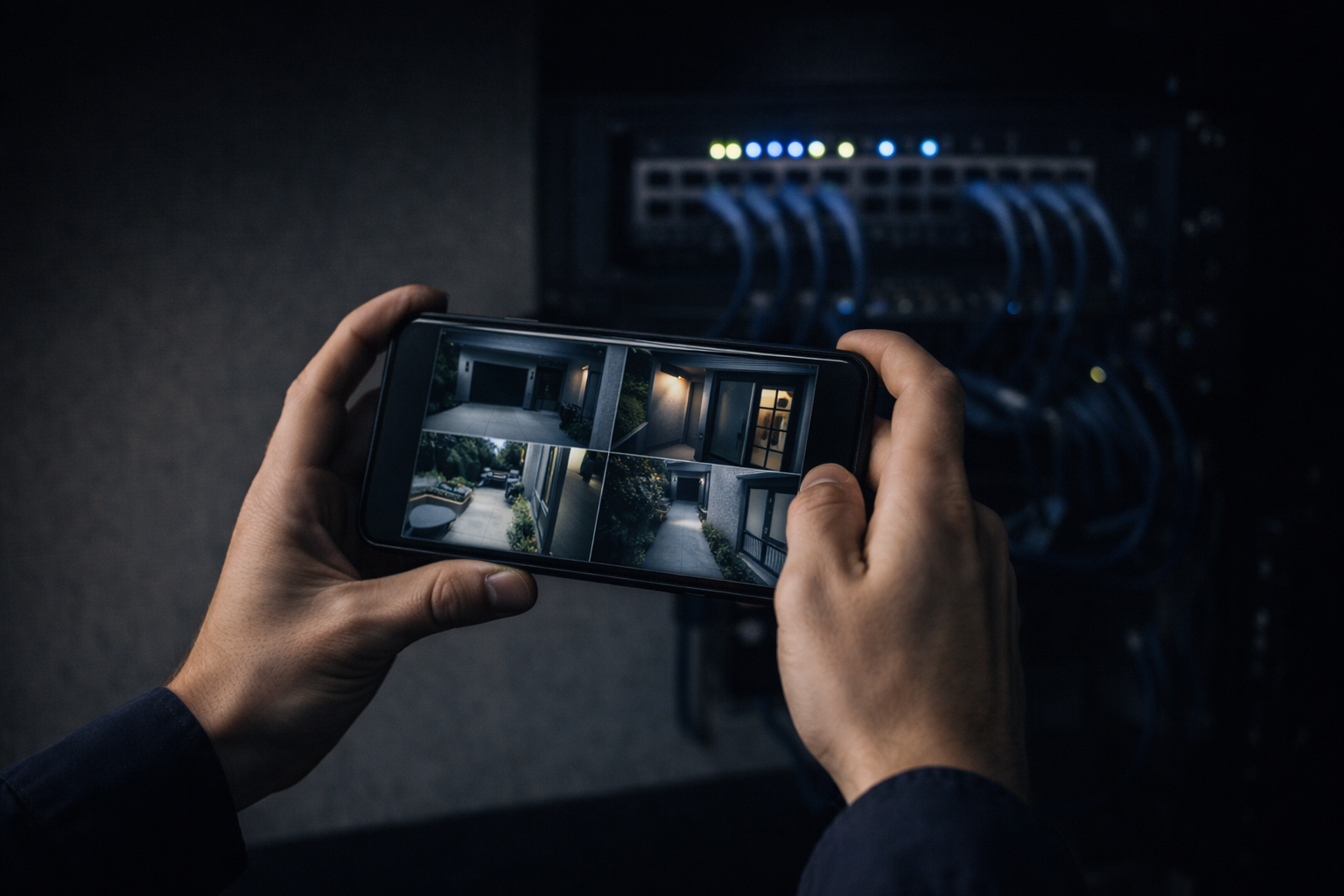
If you have started pricing structured cabling for your home, you have probably noticed that nobody wants to give you a number. There is a reason for that, and it is not evasion. Structured cabling cost depends almost entirely on your house, and anyone who fires off a firm price over the phone is guessing. This post lays out honest ranges for a Bay Area home, explains what moves them, and is straight with you about how we actually price the work: time and materials against a written estimate, not a quote. By the end you should know roughly what to expect, and why a real number takes a walkthrough.
What a Drop Really Costs, and Why the Range Is Wide
Most residential work is measured in drops. A drop is a single cable run from your network panel to a wall outlet — one Cat6 or Cat6A line, terminated and tested at both ends. Simple idea, enormous range.
An easy, accessible drop — a short run through an open attic or garage — can be modest. A single hard run can cost ten times as much. Picture one cable that starts in the garage, crosses a crawlspace, then climbs to the attic above a finished second floor. That is still one drop, but the labor, access, and risk are in a different universe. A run like that can land around $1,500 on its own. We are not going to pretend otherwise to win the job.
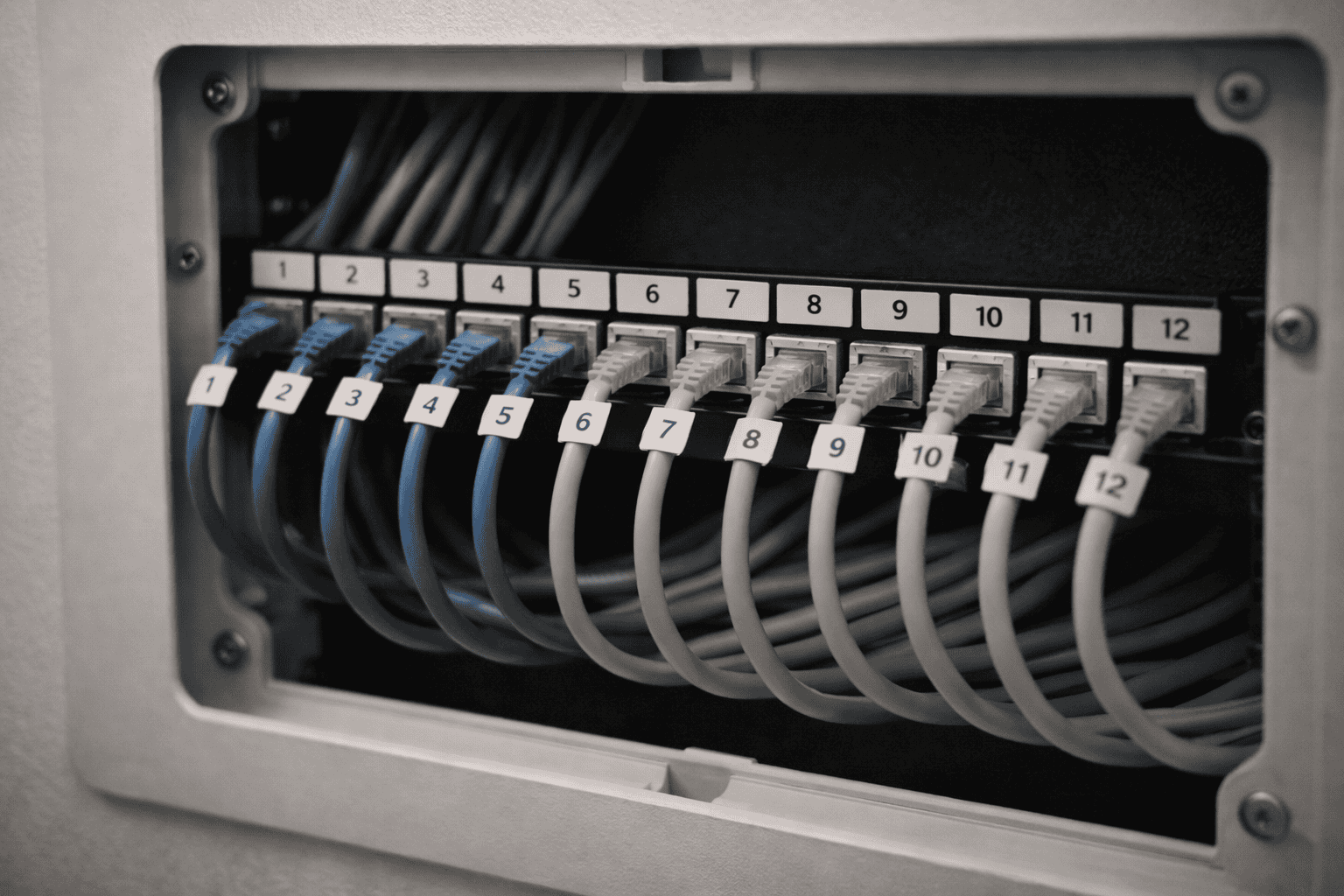
The network panel, where every cable terminates, is a separate line item: a patch panel, mounting, termination, and a small structured-wiring enclosure, before any active gear. The ethernet drop cost and the panel scale differently, so ten drops to one clean panel is a very different number than ten scattered runs.
Whole projects vary just as much. As rough categories, assuming reasonable access:
- A few drops for a home office and a couple of rooms.
- A wired floor or small whole-home job with a panel and access-point cabling.
- A full whole-home backbone — multi-AP, camera-ready, with a structured panel.
A difficult home can push any of these well past the easy case. Your cat6 installation price is set by the building, not a menu.
What Actually Drives the Price
The biggest cost driver is not the cable, it is access. Cat6 is cheap. Getting it cleanly from point A to point B in a finished home is where the labor lives.
- Construction type. Open attics and crawlspaces are fast. Two-story homes with no vertical chase, slab foundations, or the plaster-and-lath walls common in older Oakland and Berkeley homes are slow.
- Run count and length. Cost per drop usually falls as the count rises, because the crew and the panel are already there.
- Finish expectations. Surface raceway is cheaper than fishing cable for zero visible wiring. “Make it invisible” costs more than “make it work.”
- Wall and ceiling repair. If a run requires opening drywall, someone patches and paints. An honest contractor tells you that up front.
A Bay Area home network wiring cost reflects all of this, which is why two houses on the same street can come in thousands apart for the same drop count.
Already Have a Bad Install? Budget for Diagnosis First
A large share of our calls are fixing someone else’s work, and redo is not priced like new work. The first thing we bill is diagnosis. On an unlabeled, untested install we have to trace where each cable actually goes and find what failed before we touch a repair. That detective work is the expensive part, not the new cable.
A single bad run is often a few hundred dollars to trace, re-terminate, or re-pull. Multiple bad drops climb into the thousands — not because the materials cost more, but because untangling an undocumented mess takes hours before any real fixing starts. This is the hidden bill behind a cheap original install: you pay once for the bargain job, and again for someone to reverse-engineer it. It is the clearest argument we know for paying a fair structured cabling cost once.
How Black Owls Prices and Plans the Work
We do not give quotes. We work time and materials against a written estimate with a floor and a not-to-exceed, or NTE, cap. You see the realistic range and the most you will ever pay, and you are not exposed to an open-ended bill.
That estimate comes from a paid walkthrough, where we verify layout, pathways, and access in person. The walkthrough is exactly how we can stand behind a real number even when it is high, instead of lowballing you and surprising you on install day. It is not free, because real assessment is real work, but it is honest — and the installation is backed by a warranty.
Some projects need more than a walkthrough. If yours calls for a dedicated planning and design stage, we will tell you during the walkthrough and talk through how deep it needs to go. We would rather plan once than redo misunderstandings: we plan, you confirm, and only then does anyone pull cable.
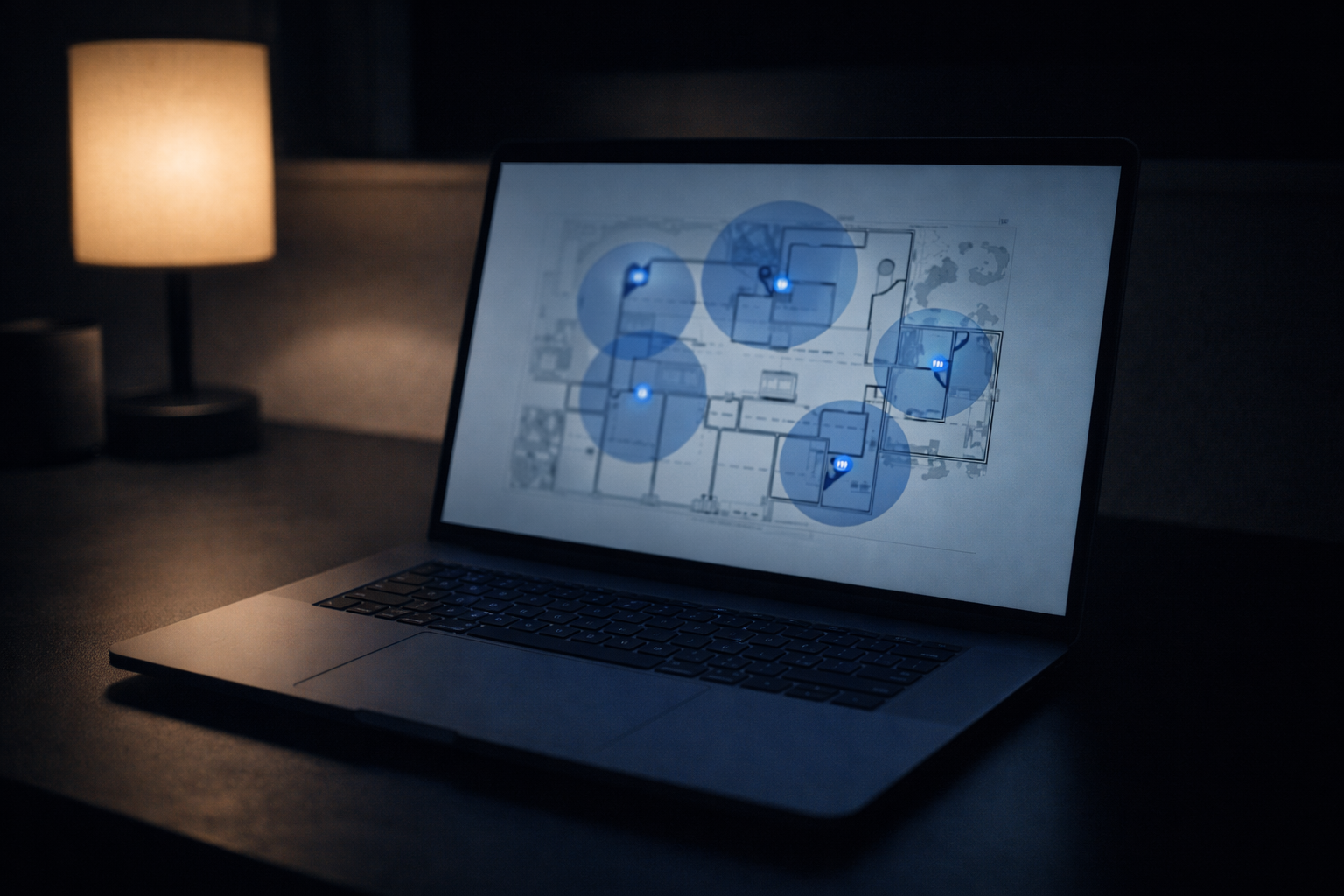
Every run is labeled and tested. You also get a clear map of how your cables run — where each line goes and what it serves. It is a plain visual plan, not an engineering as-built drawing, but it means the next person to touch your network is not guessing.
We are a C-7 licensed low-voltage contractor (#1141654), so the work is permitted where required and properly insured. You can see the full process on our structured cabling page.
Get a Real Estimate, Not a Guess
The structured cabling cost for your home should not be a mystery — but it also should not be a number someone invents sight unseen. If you want a real estimate with a floor and an NTE cap, the next step is a walkthrough. We map your drops, confirm the pathways, and put it in writing. Send your address and what you are trying to connect through our contact page, and we will take it from there.