
Everything you run depends on the connection underneath it
The right connection and the right phone system for your business, chosen across the market and managed from first quote to go-live.
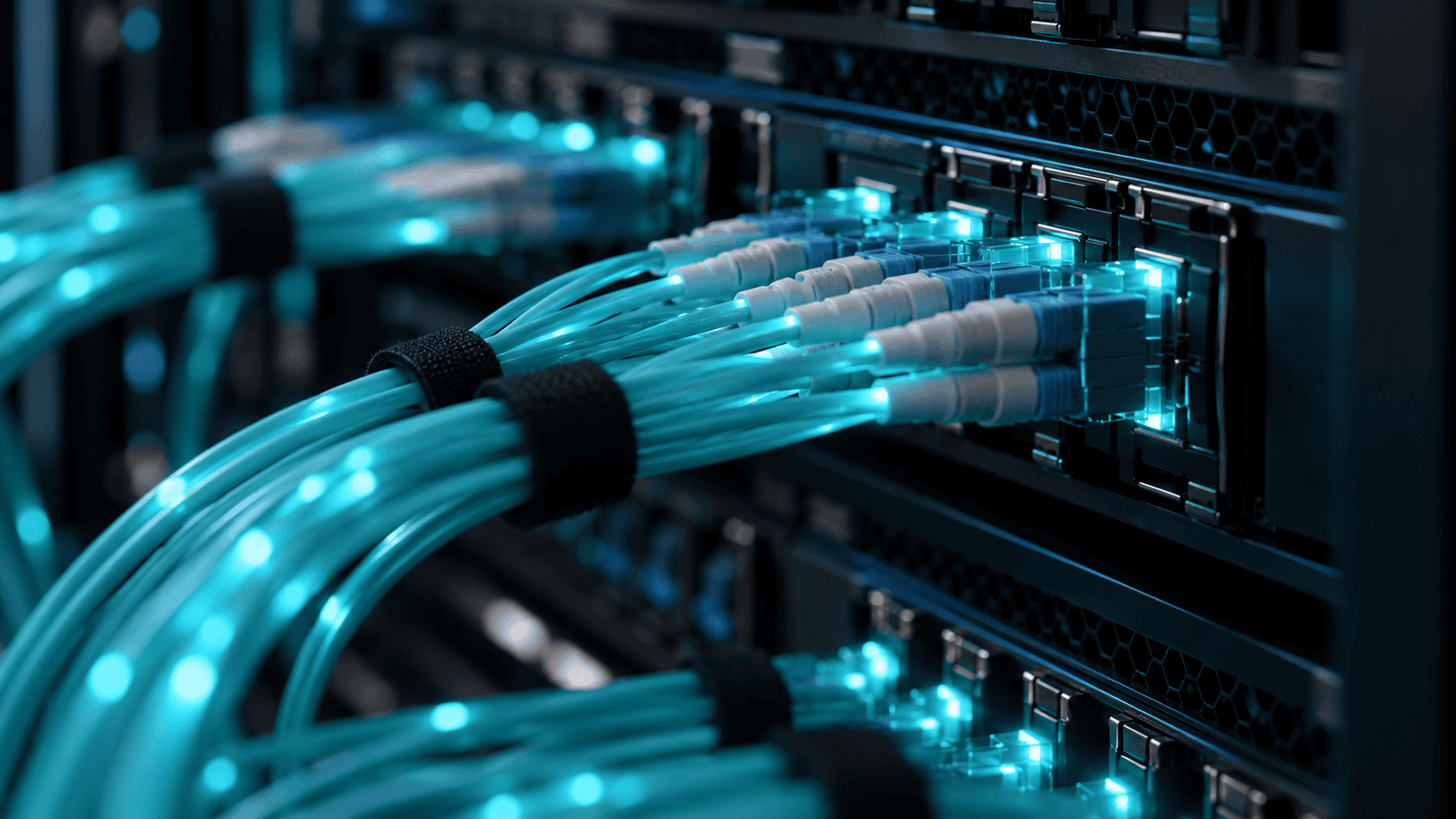
Cloud apps, phones, payments, security cameras, remote work: all of it stops when the internet does. Yet a connection and a phone system are usually chosen once, and there is rarely time to revisit that choice when the contract renews.
We look at the whole market for you. Black Owls compares business internet and voice options across leading national and regional providers, lays out the trade-offs in plain language, and stays with you through installation and every renewal after.
Business internet
The right connection depends on what your business cannot afford to lose. We help you source and implement:
- Fiber internet: symmetrical speeds and low latency for cloud-heavy teams.
- Dedicated internet access (DIA): bandwidth that is yours alone, backed by an uptime guarantee.
- Business broadband and cable: fast, cost-effective connectivity for offices and branch sites.
- 5G and fixed wireless: quick to deploy, and a strong second path when fiber is not available.
- Failover and redundancy: a backup connection that takes over automatically when the primary goes down.
- SD-WAN: intelligent traffic routing that ties multiple sites and connections into one managed network.
Business voice
Phone systems have moved to the cloud, and the old copper lines are going away. We help you source and implement:
- Cloud phone systems (UCaaS): calling, messaging, and video in one platform, on any device.
- Contact center (CCaaS): call routing, queues, reporting, and AI assistance for teams that handle customer calls at volume.
- POTS replacement: modern alternatives for the analog lines behind fire alarms, elevators, fax machines, and gate phones.
- SIP trunking: a way to keep your existing phone system and move its lines to the internet.
- Number porting and migration: your numbers move with you, with no gap in service.
When businesses call us
- An internet or phone contract is coming up for renewal.
- You are opening, moving, or closing a location.
- An outage cost you a day of work and you want a backup.
- Your carrier announced the end of copper phone lines, or the bill for them keeps rising.
- You run several sites with different providers and want one view of the whole picture.
- Your phone system is aging and remote staff cannot use it.
How it works
Assess. We learn how your business uses internet and voice today: sites, contracts, pain points, and what downtime costs you.
Compare. We check which providers serve your addresses and bring back real options side by side: speed, uptime commitments, terms, and price.
Contract. You choose. We handle the paperwork with the provider and make sure the terms match what was quoted.
Implement and support. We track the installation, coordinate the cutover, and remain your point of contact for billing issues, escalations, and renewals.
Providers
We work with the major national carriers and the regional and specialty providers most businesses never hear about.


Why work with an advisor
- One conversation instead of ten. You describe your needs once. We take them to the market.
- A real comparison. Options from competing providers, side by side, in the same format.
- Advice that is not tied to one carrier. We recommend what fits your business, whoever provides it.
- Someone who stays. When an install is delayed or a bill needs a second look, you call someone who knows your account.

Dedicated internet access (DIA) gives your business a private connection with guaranteed bandwidth, symmetrical upload and download speeds, and a service level agreement for uptime and repair time. Business broadband shares capacity with other customers in the area, so speeds can vary at busy times and uptime is delivered on a best-effort basis. Broadband costs less and suits many offices. DIA fits businesses where an outage or slowdown directly stops revenue or operations.
Start with which providers actually serve your address, since availability differs building by building. Then compare the connection type, upload and download speeds, the uptime commitment, contract length, installation timeline, and total monthly cost including equipment and fees. The best choice is rarely the fastest or the cheapest plan. It is the one that matches how much downtime your business can tolerate. An independent technology advisor can gather quotes from multiple providers and present them side by side.
If your phones, payment systems, or cloud applications stop working when the internet goes down, a backup connection is worth having. The most reliable setup uses a second connection from a different provider on a different technology, such as fiber as the primary and 5G or cable as the backup, with automatic failover. That way a single cut cable or carrier outage does not take your business offline.
Broadband, cable, and 5G connections are often installed within days to a few weeks. Fiber and dedicated internet access usually take longer, commonly 30 to 90 days, and more if the provider has to build fiber into your building. Because lead times vary so widely, plan a new connection well before a move-in date or contract end.
POTS stands for plain old telephone service, the analog copper lines that still connect many fire alarm panels, elevator phones, fax machines, and gate or entry systems. Carriers are retiring copper networks and raising prices on the lines that remain. POTS replacement moves those devices to a managed solution that runs over internet or cellular connections, typically with battery backup and monitoring, while the devices keep working the way they do today. For life-safety devices, the replacement should be confirmed to meet the applicable fire and elevator code requirements.
UCaaS (unified communications as a service) is a cloud phone system for the whole company: calling, messaging, video meetings, and voicemail on desk phones, computers, and mobile devices. CCaaS (contact center as a service) is built for teams that handle customer interactions at volume, adding call queues, skills-based routing, recording, reporting, and AI tools. Many businesses use both, with the two integrated.