
Your buildings can tell you far more than who came in
Cameras, access control, and connected sensors from the right providers, with one advisor managing the project from selection to handover.
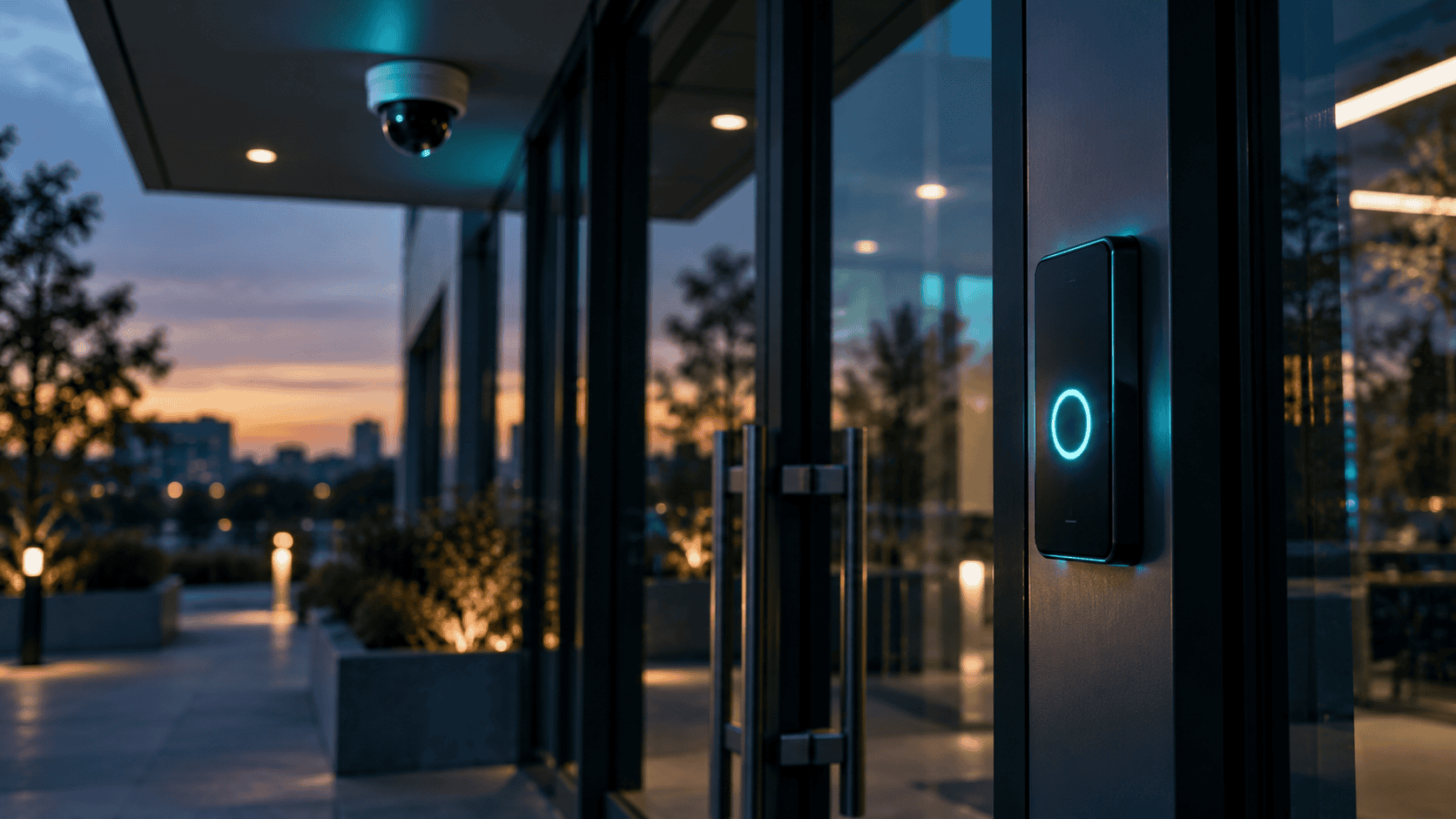
Cameras and door readers used to be standalone systems, each managed on its own. Today they are cloud platforms that connect to your network, your HR system, and your phone. Sensors now watch temperature, leaks, air quality, and equipment the same way.
That shift created a crowded market with very different platforms, pricing models, and contract terms. Black Owls helps you define what you need to see and control, compares the providers that deliver it, and manages the project through installation.
Physical security
Protecting people and property now runs on software as much as hardware. We help you source and implement:
- Cloud video surveillance: cameras you can view, search, and share from anywhere, without a recorder to maintain.
- Video analytics: search by person, vehicle, or event, and alerts when something happens instead of hours of footage review.
- Access control: doors managed from one dashboard, with mobile credentials and access removed the moment someone leaves.
- Visitor and intercom systems: video intercoms and visitor check-in tied to your doors.
- Alarm and remote monitoring: intrusion detection and live monitoring by a professional operations center.
- Multi-site security: every location on one platform, with one view for whoever is responsible.
More than security
Modern cameras do more than record incidents. The same system that protects a building can show how it is being used and help you take better care of the people in it.
- Customer care: the system notices when someone has been waiting too long, so a team member can step in and help.
- Flow and staffing: you see when and where it gets busy, and put people where they are needed.
- Space use: you learn which areas are used and which sit empty.
- Operations: you confirm deliveries, opening routines, and safety procedures without being on site.
A camera system chosen only for security leaves this value unused. We help you choose a platform that serves both.
IoT
Connected sensors turn buildings, equipment, and vehicles into sources of data. We help you source and implement:
- Environmental sensors: temperature, humidity, leaks, air quality, and vape detection, with alerts before damage is done.
- IoT connectivity: cellular data plans and SIM management for devices, kiosks, and equipment in the field.
- Asset tracking: location and status of equipment, inventory, and shipments.
- Fleet and vehicle telematics: GPS tracking, dash cameras, and driver safety tools.
- Smart building systems: occupancy, energy, and space-use data for facilities and property teams.
- Equipment monitoring: sensors that report when machines, refrigeration, or power need attention.
When businesses call us
- The camera system is aging, or finding footage takes longer than it should.
- You want simpler control over who has access and when it ends.
- You manage several locations and each one has a different system.
- An incident showed gaps in coverage or recording.
- You are opening a new site and want security planned with the network, not after it.
- A freezer, a server room, or a water leak cost you money that a sensor would have saved.
How it works
Assess. We learn what you need to see, control, and measure, across which sites, and what you have in place today.
Compare. We bring back platforms and providers that fit, side by side: features, hardware, licensing, installation, and total cost over the contract.
Contract. You choose. We make sure the scope of work and the terms match what was proposed.
Implement and support. We oversee installation and setup, confirm the system works as specified, and stay your point of contact for changes and growth.
Providers
We work with leading cloud security platforms, IoT and connectivity providers, and qualified installation partners.
Why work with an advisor
- Platform before hardware. We start from what you need to do with the system, not from a camera model.
- A real comparison. Competing platforms side by side, including licensing costs over the full term.
- Advice that is not tied to one manufacturer. We recommend what fits your business, whoever makes or installs it.
- Planned with your network. Cameras, doors, and sensors all ride on your network and internet. We plan them together.
An on-premises system stores footage on a recorder at your site. You maintain the recorder, and remote viewing takes extra setup. A cloud system is managed through a web dashboard, with footage stored in the cloud, on the cameras, or both. You can view and share video from anywhere, updates are automatic, and there is no recorder to fail. Some cloud systems carry a recurring license fee per camera, so the comparison should cover total cost over several years.
It depends on how the platform is designed. Many cloud camera systems store video on the camera itself and send it to the cloud only when someone views it or for backup, so they use very little bandwidth in normal operation. Systems that stream continuously to the cloud can need from under 1 Mbps to several Mbps of upload per camera, depending on resolution. Upload speed is the limit to check before choosing a platform.
Cloud-based access control lets you manage doors, users, and schedules from a web dashboard or phone instead of a server in the building. You can grant or remove access in seconds, use phones as credentials, see who entered and when, and manage several locations from one place. Many platforms also connect to HR and identity systems, so access ends automatically when someone leaves the company.
Many businesses keep 30 days of footage. Some industries, contracts, and insurers require 90 days or longer. Retention length drives storage and licensing cost, so it should be set by your actual legal and operational requirements rather than by a default setting.
IoT, the internet of things, means physical devices that collect data and send it over a network: temperature, humidity, and leak sensors, air quality and vape detectors, smart locks and door sensors, occupancy counters, energy meters, smart thermostats and lighting, asset trackers, vehicle telematics, connected kiosks and payment terminals, and monitored equipment such as refrigeration, generators, and elevators. For a business, the value is early warning and visibility. A sensor reports a failing freezer or a water leak before it becomes a loss, and tracking shows where equipment and vehicles are without a phone call.
Often, yes. It depends on whether your switches can supply enough power over Ethernet, whether the cabling reaches the device locations, and whether the network has capacity for the added traffic. Security devices should sit on their own network segment, separate from staff and guest traffic. A short assessment before purchase shows what the network can support and what needs to be added.